Trending

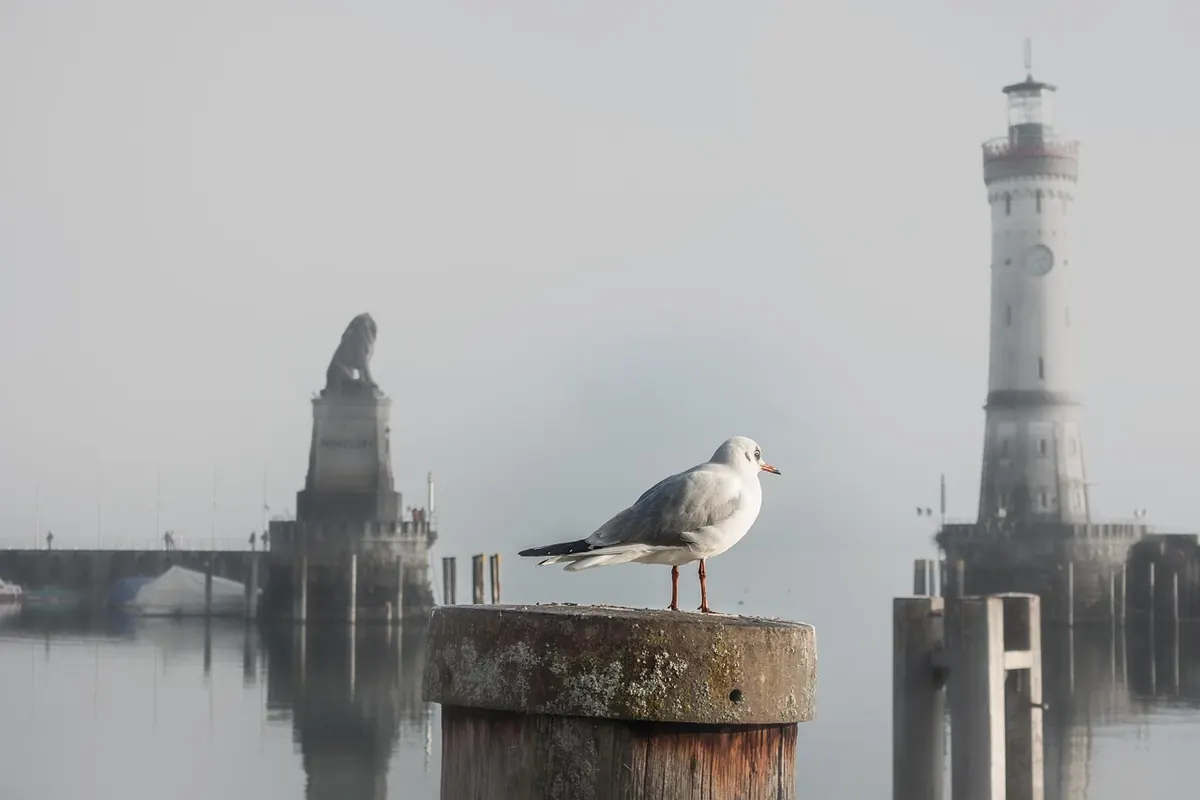
There is a particular quiet that arrives with sea fog. The gulls sound muffled, voices carry oddly, and the headland you could see ten minutes ago has simply gone. On the British coast this is not a rare curiosity — it is a routine part of spring and summer weather, and it catches people out every year.
Fog is the one weather hazard that works mainly by removing information. You can dress for rain and brace against wind, but fog takes away the landmarks you were using to judge where you are and what is heading towards you. Understand how it forms and it becomes far less mysterious. Build a few habits and it becomes far less dangerous.
Fog is cloud at ground level: countless tiny water droplets suspended in the air, too small to fall as rain but numerous enough to scatter light. Forecasters draw the line by visibility — mist when you can still see roughly a kilometre or more, fog when it drops below that. Thick coastal fog can cut visibility to a few tens of metres, which on a cliff path or in a shipping channel is very little indeed.
Fog needs two ingredients: moisture in the air, and a way of cooling that air until it can no longer hold the moisture as invisible vapour. That threshold is the dew point. Around the coast, the sea is usually the thing doing the cooling.
Most British sea fog is advection fog. Advection simply means air moving from one place to another — here, warm damp air sliding over a colder sea surface.
The sequence is easy to picture:
That is why the classic setup is a light to moderate onshore wind, mild humid air, and a sea that has not caught up with the land. British seas are at their coldest relative to the air in late spring and early summer: inland, May and June can be warm and bright while the water a few miles offshore is still in the low teens or colder. Send a warm southerly or easterly flow across that and you get fog banks sitting stubbornly along the coast while the rest of the country basks.
Because it depends on the wind, sea fog can be persistent. Radiation fog over land — the kind that forms on calm, clear nights and burns off after breakfast — behaves quite differently. Sea fog can hang on for days while the wind keeps feeding it.
The regional names for sea fog tell you where it is felt most.
The vocabulary changes with the postcode; the mechanism does not. On the east coast the North Sea is the cold surface, and haar often arrives on an easterly or north-easterly wind in spring and summer, sometimes as a distinct wall of white with blue sky still visible behind it. If you have stood on a seafront in warm sunshine and watched it vanish in twenty minutes, you have met haar.
The hazards on a foggy coast are usually the ones you would normally manage by looking.
Fog does not block ultraviolet light, so it is entirely possible to get sunburnt on a beach you cannot see the end of. Keep an eye on the tide line and know where the nearest steps or slipway are. Children and dogs can move out of sight in seconds, and shouting carries badly in fog — pick a meeting point and agree it before anyone wanders.
On a coastal route, dipped headlights are the default. Fog lights are for when visibility is seriously reduced — around 100 metres or less — and should be switched off as soon as it improves, because they dazzle other drivers. Slow down, leave a bigger gap, and use the near-side verge or lane markings to guide you rather than staring at the tail lights in front.
At sea, fog is a collision risk before it is a navigation problem. Large ships do not stop, and a small boat's radar signature can be faint. The general rules hold whatever you are in:
If you are new to navigating in poor visibility, a recognised training course is money well spent. Fog is not the moment to be learning the rules.
Sea fog seldom arrives without any warning. The forecast usually flags it, and the air often gives you clues first.
Before you leave, do four things:
If the fog arrives while you are out, slow down, stop relying on landmarks alone, keep everyone close, and switch on your lights. Fog is rarely what hurts people on the coast. Being caught without a plan is.
Photo: 13156007 / Pixabay