Trending

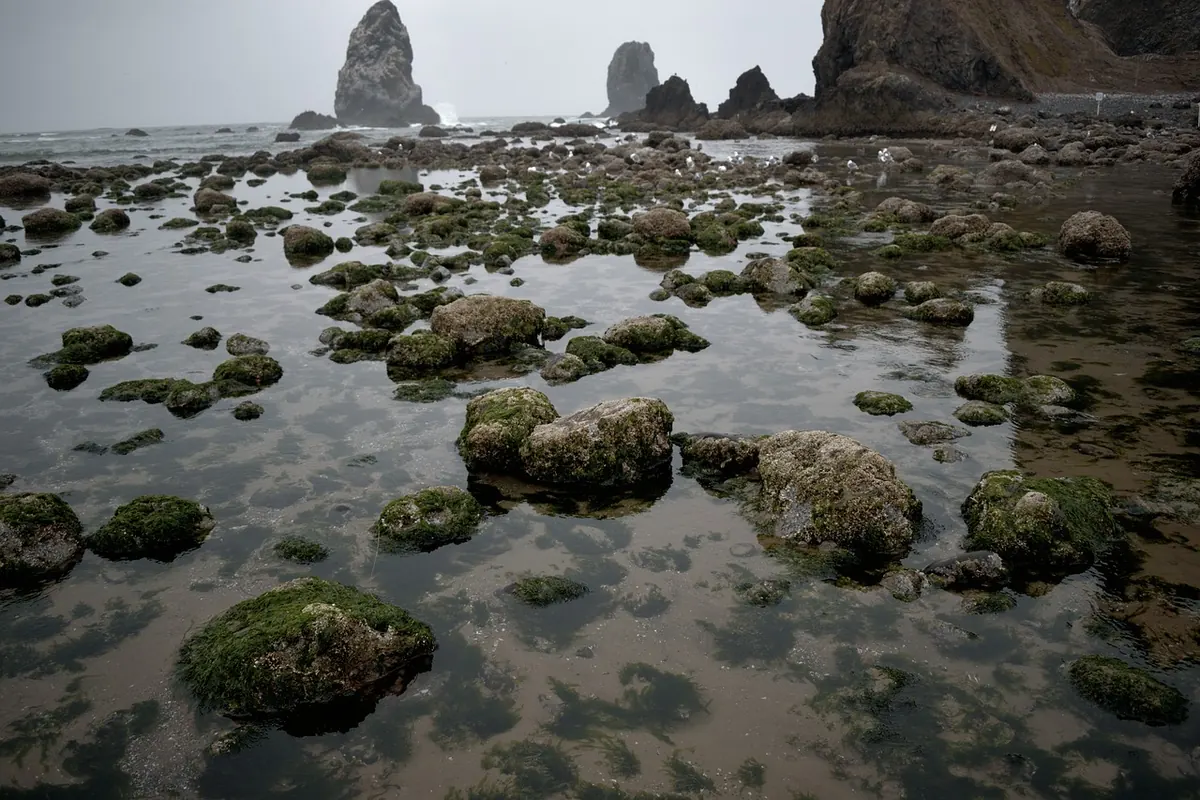
There is a particular kind of disappointment in arriving at your favourite rock shelf, nets and trays ready, only to find the tide has barely pulled back at all. The pools are there, but the good ones are still under a metre of moving water, and the best you can do is peer at a few limpets. Most of the time the explanation is the same: you have turned up on a neap tide rather than a spring. Understanding the difference takes a few minutes and will change how you plan every trip to the shore.
The tide is a response to the gravitational pull of the moon and, to a lesser extent, the sun. Twice a lunar month — at the new moon and again at the full moon — the two are roughly in line, and their pulls work together. The result is a larger tidal range: higher high water and, crucially for us, lower low water. Those are the spring tides.
A week or so later, at the first and third quarters, the sun and moon sit at right angles to one another. Their influence partly cancels out, the range shrinks, and the low tide never retreats as far. Those are neap tides. The pattern repeats month after month, so you get a run of springs followed by a run of neaps, roughly every fortnight.
Two things are worth clearing up. First, "spring" here has nothing to do with the season — spring tides happen in every month of the year. Second, tidal range varies enormously around the British coast. A few metres is typical in many places; in parts of the Bristol Channel or the far north of Scotland, the difference between a spring low and a neap low can be several metres. That is the difference between a walkable reef and a deep channel.
Spring low water is when the lower shore opens for business. The band that sits underwater for most of the month — the kelp edge, the deeper gullies, the lower pools — is briefly walkable, and with it comes wildlife that rarely appears anywhere else. Starfish, sea hares, cushion stars, edible crabs, butterfish, blennies and, on some western shores, the occasional small octopus. If you keep a species list, this is when it grows.
The trade-off is pace. On a spring tide the water can move a long way in an hour, currents in the channels are stronger, and the walk back to dry land is longer than it looks. Excellent conditions for someone with a plan and a watch; less good for a first outing with a four-year-old.
A neap low leaves you on the middle shore. You will not reach the kelp or the deep gullies, but the water that remains is usually calmer, the channels are shallow, and the sea returns slowly rather than briskly. For beginners, that matters more than species count. A child who can kneel beside one pool for twenty minutes without you glancing at the waterline every thirty seconds will learn far more than one who is being hurried back up the beach.
Neaps are also the sensible choice when the forecast is marginal, when you are exploring somewhere new and do not yet know the terrain, or when you simply want a gentle hour with a flask. Expect the familiar cast: shore crabs, prawns, blennies, beadlet anemones, periwinkles, maybe a pipefish among the weed.
Predicted heights assume average weather. Wind and swell shift the real water level, sometimes by a lot — a strong onshore wind can push water up the beach, while a persistent offshore wind holds it back. Before you commit to a trip, check three things:
Two shores twenty minutes apart can give you completely different days. A bay that faces away from the prevailing swell, or an estuary with a soft, muddy low shore, will often be workable on a day when a west-facing headland is being pounded. If you are learning, get to know one sheltered, easily accessible shore properly before chasing the dramatic ones.
Small cuts from barnacles and mussel beds are common; clean them properly and keep an eye on them. Weever fish spines and jellyfish stings are worth reading up on before you go, and if a wound or sting causes swelling, breathing difficulties or anything that worries you, seek medical advice rather than waiting to see how it goes.
Wet your hands before handling anything with a soft body. Turn every stone back the way it was, because the underside is a habitat and the top is not. Put creatures back exactly where you found them, and do not prise limpets off rocks — they cannot reattach. Leave living things where they are; some shores sit inside protected areas where collecting is restricted, so check local rules before taking anything home.
If you are new to rock pooling, start with a neap. Pick a daylight low, choose a sheltered shore you can see from the car park, arrive an hour before low water and stay for ninety minutes at most. Watch how far and how fast the water comes back. That single trip will teach you more about your local shore than any chart.
Once you are comfortable with how the tide behaves where you live, watch the calendar for the new and full moons, find the lowest predicted lows of that month, and plan a spring tide session around them. Bring a friend, arrive early, and treat the retreating water with respect. Those are the days when the shore shows you the things you have only read about.
Photo: mching49 / Pixabay